Survey Domain Adaptation Slides: Advancing Cross-Domain Research

Survey Domain Adaptation Slides offer researchers a compact, reader-friendly way to present how models trained in one domain adapt to another. The term Survey Domain Adaptation Slides here denotes a curated slide deck that highlights domain gaps, transfer strategies, and evaluation results, helping cross-domain teams align on goals and methods. This approach supports faster insight sharing, clearer storytelling, and more rigorous comparisons across diverse data sources.
Foundations of Survey Domain Adaptation Slides
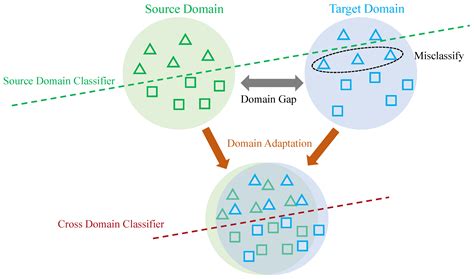
At their core, these slides distill complex cross-domain challenges into digestible visuals. They typically cover problem framing, domain discrepancy, alignment techniques, and validation in a sequence that mirrors the research workflow. By focusing on concrete examples, Survey Domain Adaptation Slides make it easier for audiences to grasp where a model succeeds, where it struggles, and what experiments would best reveal underlying phenomena.
Key Points
- Clarifies the specific domain shift and its practical impact on model performance across datasets.
- Shows how feature alignment and distribution matching translate into measurable gains in transferability.
- Emphasizes transparent methodology, including data splits, baselines, and ablation studies.
- Encourages reproducibility by including hyperparameter ranges and evaluation protocols.
- Fosters cross-disciplinary dialogue by presenting results in accessible, narrative-friendly formats.
Design and delivery considerations
Effective slides balance clarity with depth. Use concise bullet points, clear visuals, and consistent color-coding to differentiate domains. An ideal slide set starts with the problem statement, then maps the domain gap, followed by the proposed adaptation strategy, and ends with results and takeaways. Remember to integrate transparent metrics and explicit limitations to maintain credibility.
Common slide templates and what to include
Templates often include a problem statement, a data overview, a schematic of the adaptation approach, ablation results, and a succinct conclusion. Each template should emphasize how the cross-domain insight informs future research, enabling the audience to quickly grasp both the rationale and the impact of the work.
Practical guidance for building your deck
Start with a one-idea-per-slide principle, then layer evidence with visuals that tell a story. Include concrete numbers, but pair them with intuitive explanations. Use visuals such as domain maps, distribution plots, and transfer curves to convey qualitative and quantitative findings without overwhelming the viewer.
Evaluation and interpretation across domains
Evaluation should compare source and target domains using consistent metrics. Highlight where improvements are robust across multiple targets and where they are domain-specific. This framing helps readers understand the generalizability of the adaptation approach and guides future experimentation.
FAQ Section
What distinguishes Survey Domain Adaptation Slides from a traditional research presentation?
+They emphasize cross-domain issues with a focused structure: domain gap, adaptation strategy, and cross-domain results. The goal is to convey transferability clearly and efficiently, so reviewers can quickly assess the core contribution and its generalizability.
<div class="faq-container">
  <div class="faq-item">
    <div class="faq-question">
      <h3>How should I choose visuals to illustrate domain shifts?</h3>
      <span class="faq-toggle">+</span>
    </div>
    <div class="faq-answer">
      <p>Prefer visuals that map distributions and relationships across domains, such as distribution plots, feature maps, or schematic diagrams of the adaptation mechanism. Pair visuals with concise captions that link the image to a concrete measurement or hypothesis.</p>
    </div>
  </div>
</div>

<div class="faq-container">
  <div class="faq-item">
    <div class="faq-question">
      <h3>What are best practices for reporting results in these slides?</h3>
      <span class="faq-toggle">+</span>
    </div>
    <div class="faq-answer">
      <p>Report baselines and ablations clearly, specify data splits, and provide uncertainty where appropriate. Use a consistent color scheme to distinguish domains and include a short, actionable takeaway per slide to reinforce the narrative.</p>
    </div>
  </div>
</div>

<div class="faq-container">
  <div class="faq-item">
    <div class="faq-question">
      <h3>How can I make cross-domain findings actionable for collaborators?</h3>
      <span class="faq-toggle">+</span>
    </div>
    <div class="faq-answer">
      <p>Translate results into concrete next steps, such as recommended data collection, targeted ablations for underperforming domains, or adjustments to the adaptation technique. Close with a checklist that collaborators can agree on for proceeding.</p>
    </div>
  </div>
</div>