
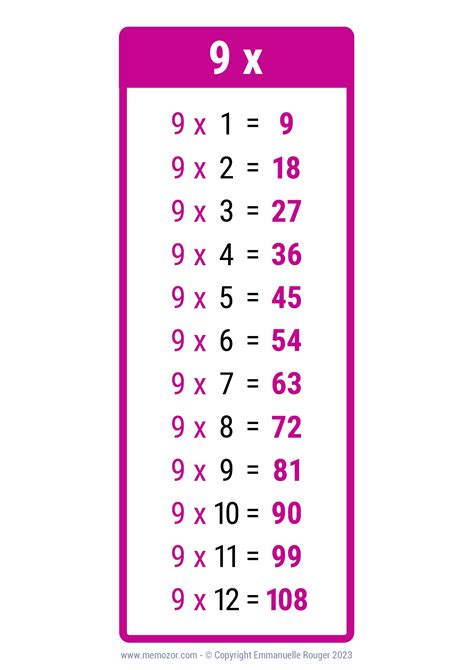
In the world of computation, a simple mental exercise like 695416 Times 9 can serve as a gateway to understanding how big-number calculations shape the future. This article explores how the arithmetic behind 695416 Times 9 scales from a single multiplication to the sprawling, high-precision tasks powering science, finance, and technology.
Key Points
- Small, concrete multiplications reveal carry propagation patterns that influence the design of robust arithmetic systems.
- As numbers grow, specialized algorithms such as FFT-based methods and Karatsuba-like splits become essential for speed and scalability.
- Hardware acceleration—GPUs, FPGAs, and custom ASICs—drives real-time big-number computations in fields from simulations to encryption.
- Trade-offs between precision, performance, and energy use guide choices in data centers and edge devices alike.
- Using tangible examples like 695416 Times 9 helps learners grasp abstract concepts in big-number math and develop intuition for scaling.
Foundational Algorithms Behind Large-Number Tasks
At the core of big-number calculations are methods that multiply, add, and reduce digit streams efficiently. From the classic grade-school approach to advanced techniques such as Karatsuba, Toom-Cook, and FFT-based Schönhage-Strassen, the goal is to minimize time and memory while preserving accuracy. Real-world performance often hinges on how smoothly carries are managed as digits proliferate—an idea that starts with simple examples like 695416 Times 9 but scales to thousands or billions of digits.
Industry Impact and Forecast
The coming years will blend software innovations with specialized hardware to push big-number calculations further. Cryptography relies on large-number arithmetic to secure keys, while scientific simulations and financial modeling demand ever-larger integers with tight precision. Expect continued acceleration through GPUs and dedicated hardware, along with smarter algorithms that reduce energy use as data centers expand. As problems grow in complexity, hybrid systems that combine CPU, GPU, and ASIC capabilities will become more common, making big-number work faster and more accessible.
How does a simple multiplication like 695416 Times 9 relate to large-number computing?
+That multiplication is a miniature model of carry propagation and digit-wise processing. Studying it helps illuminate the challenges of scaling arithmetic when digits grow, which is exactly what we see in big-number libraries and high-precision simulations. The same patterns repeat, just at a much larger scale, highlighting why algorithm choice and memory management matter.
What trends will shape the performance of big-number calculations in the next decade?
+Expect a mix of faster multiplication algorithms (including FFT-based approaches), more capable parallel hardware, and smarter software libraries. Hybrid architectures that balance throughput and energy efficiency will become standard, enabling real-time cryptographic operations, large-scale simulations, and data-intensive analytics on an unprecedented scale.
Which industries stand to gain the most from advances in big-number calculations?
+Cryptography, for secure communications and digital currencies; scientific research that requires high-precision simulations; finance and risk modeling that handle enormous datasets; and AI systems that rely on precise numerical methods to ensure stability and reliability. Each sector benefits from faster, more accurate arithmetic at scale.
Where can developers learn more about practical big-number arithmetic?
+Explore foundational libraries like GMP and MPIR for high-precision arithmetic, study algorithm papers on Karatsuba and Schönhage-Strassen, and experiment with large-number benchmarks. Practical experimentation—starting from simple examples and scaling up—builds intuition for choosing the right algorithm and data structures for a given problem.